When Caleb starts a project, he typically is unrelenting until it is finished. When he articulated a Baird’s beaked whale several years ago, he had a short window of time to learn the process and prepare the materials. He and Marine Advisory agent Reid Brewer were on the fast track to get the bones cleaned in time for them to be utilized for the project.
Having a friend who is always the first one notified when a sea mammal stranding is reported is a key to successfully being able to articulate a species. Reid gets called about a stranding, and if he needs backup doing a necropsy, gathering samples, or whatever, sometimes he calls Caleb to help. It seemed to happen on such a frequent basis that Caleb even modified tools to help in being able to cut through mammal skin and blubber with good success.

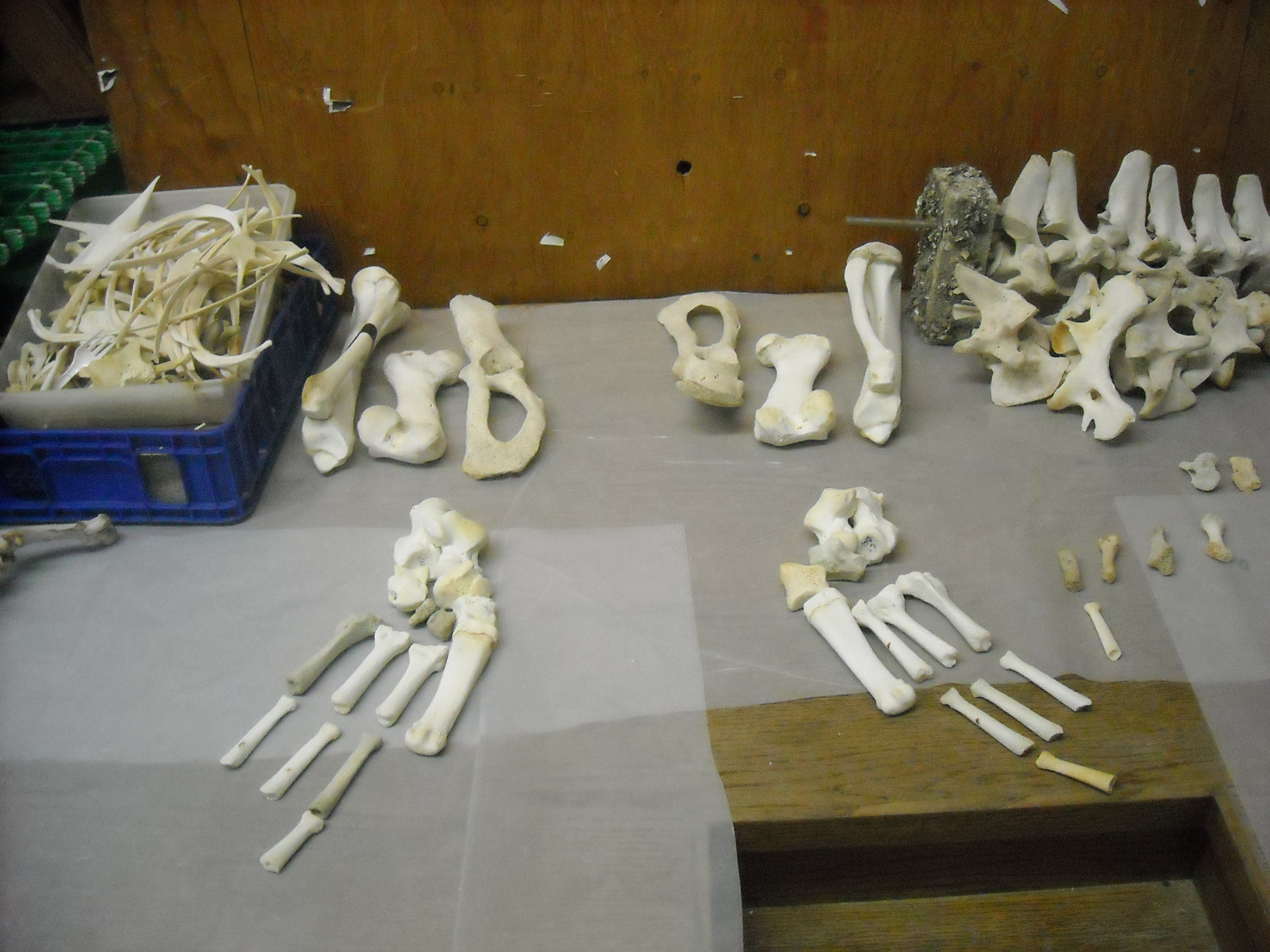
Reid is great. He is always thinking. He has a knack for pre-planning. “Caleb – lets save this skeleton just in case we need it for something”, is a typical part of Reid’s and Caleb’s conversations. The male sea lion pictured above, washed up on the beach over 2 years ago. After the investigation into the cause of death, the bones were cleaned of as much material as possible. Then at some point, Reid wrapped them in a casing and lowered them back into the sea where they sat for over a year, getting cleaned by the sea and those inhabitants that feast on smelly stuff.
After they were retreived, Caleb went through the lengthy (months) process of counting, configuring, and doing a final cleansing of the bones. He also had to either find missing bones or manufacture new fake ones to complete the skeleton. (Wave action can sometimes tear the casing that holds the bones…then you lose some.) Strangely enough, Caleb lost one of the biggest….a scapula.
Note: I promise I will finish this articulation blog. I am just so tired lately.
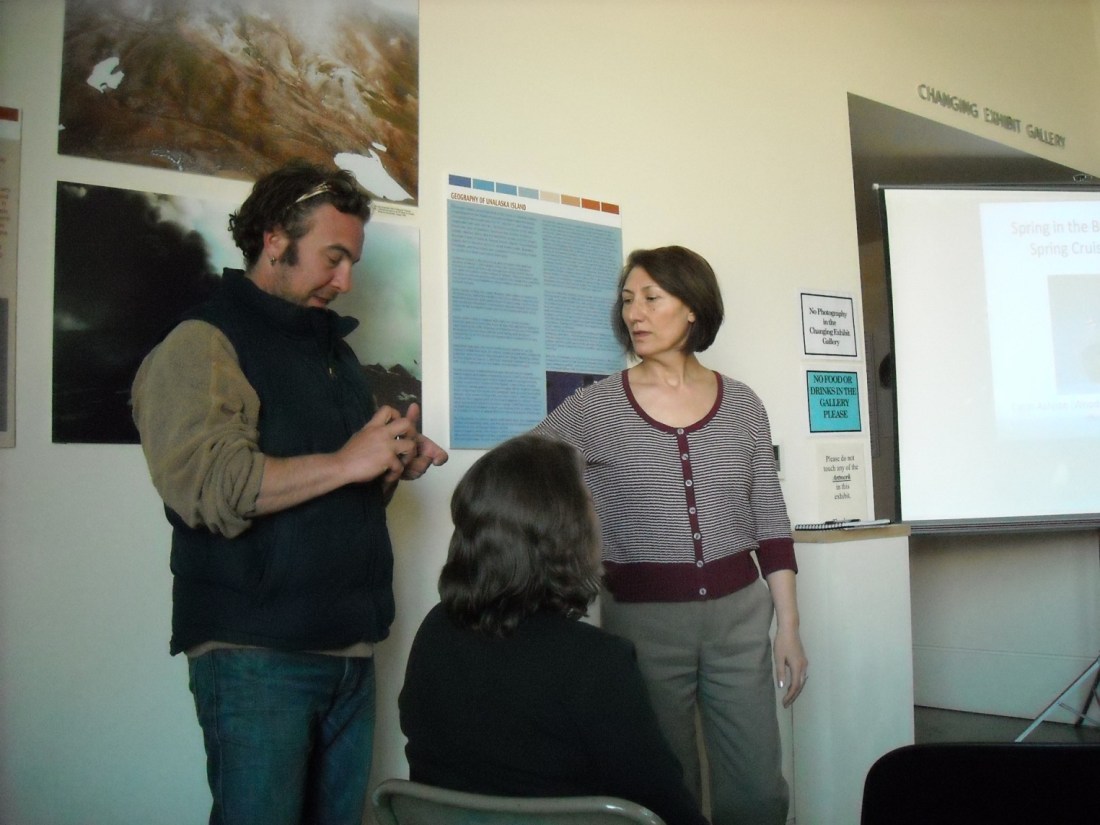 Reid Brewer, recently returned from Fairbanks, was welcomed by Zoya Johnson, the Executive Director of the Museum.
 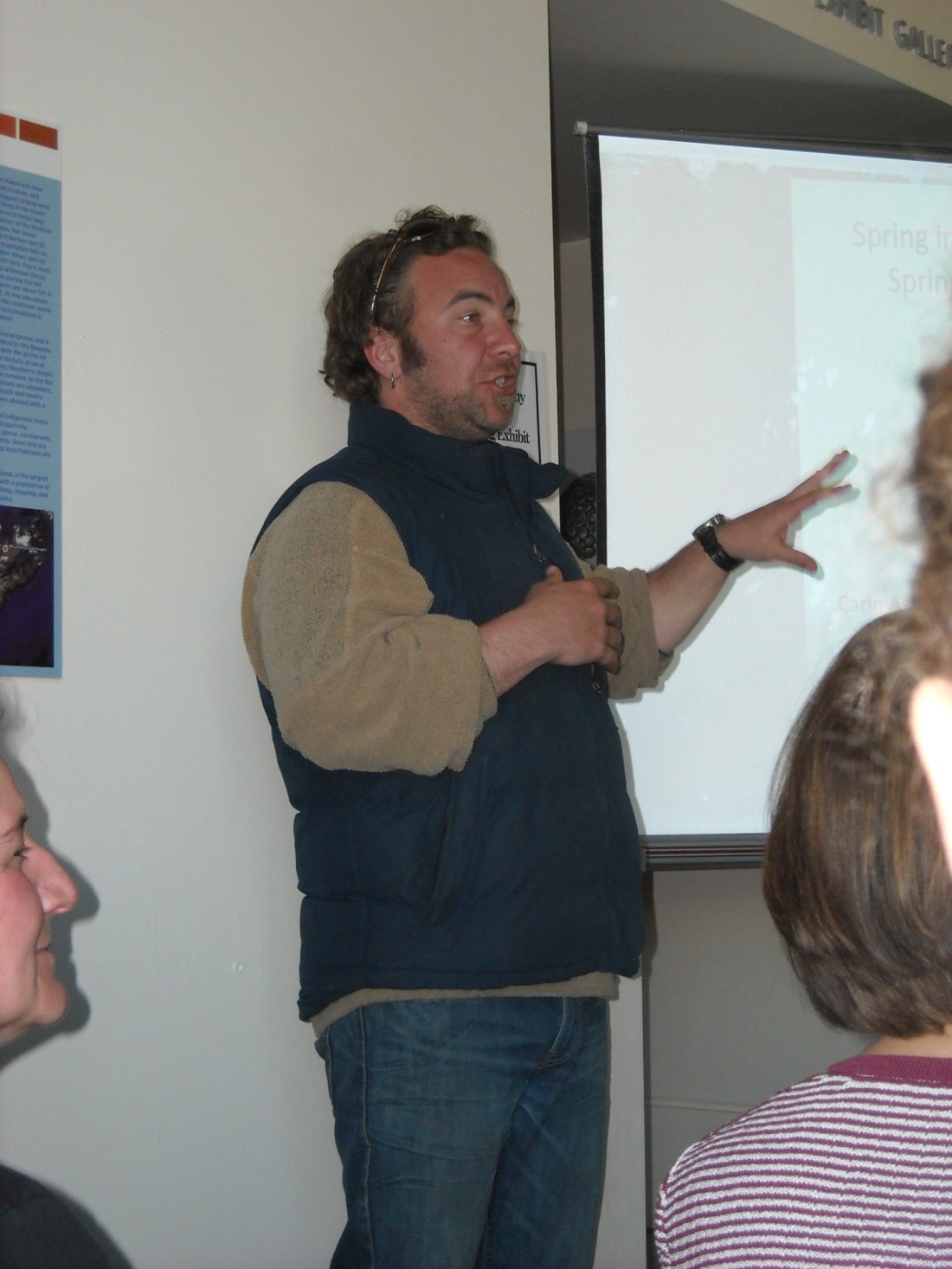 Reid has been out of town since winter working on his Phd, and since we all missed him so much – here he is again. (Sarah – he has kind of a sunburn that he got up on the hill yesterday!)
  Reid introduced Carin Ashjian, Woods Hole Oceanography Institute, who gave a presentation on the research being conducted in the eastern Bering Sea ecosystem from 2007-2012. The study is being funded by the North Pacific Research Board and the National Science Foundation. It was a full house and an interesting update on the work the team is doing. They are being hosted by the USCG icebreaker Healy.
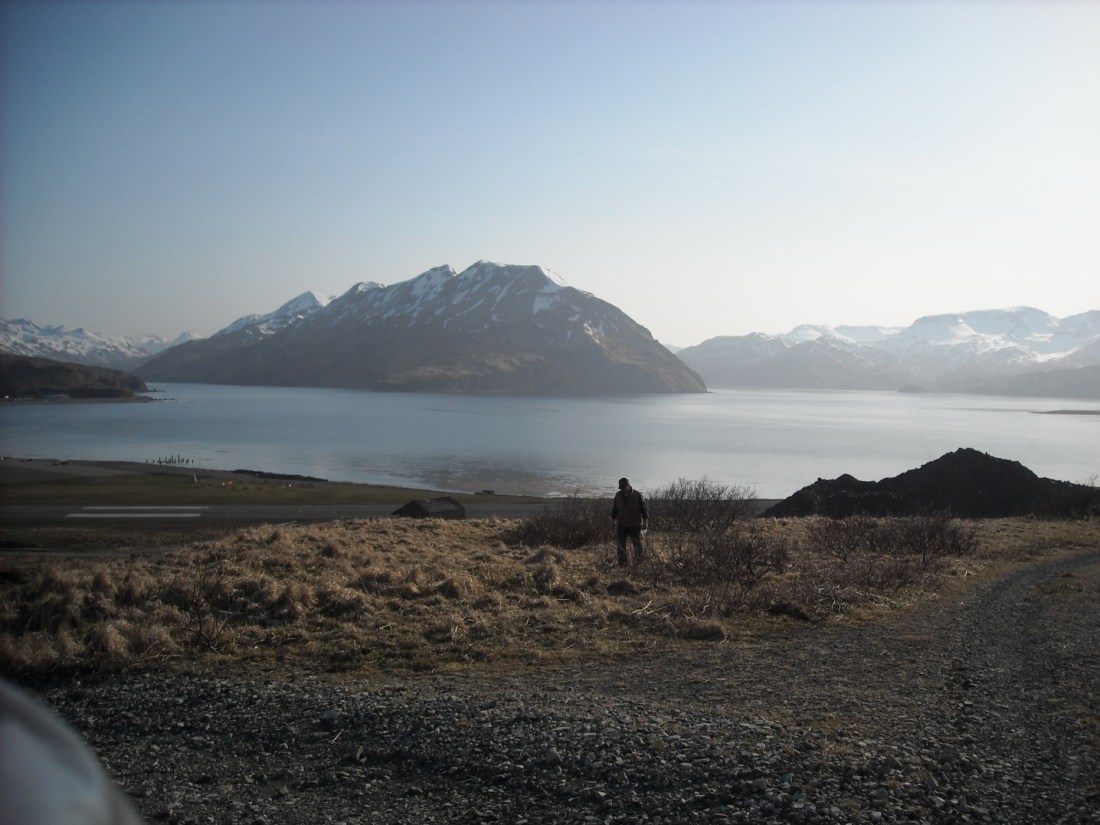
 Unalaska From My Point of View
You must be logged in to post a comment.