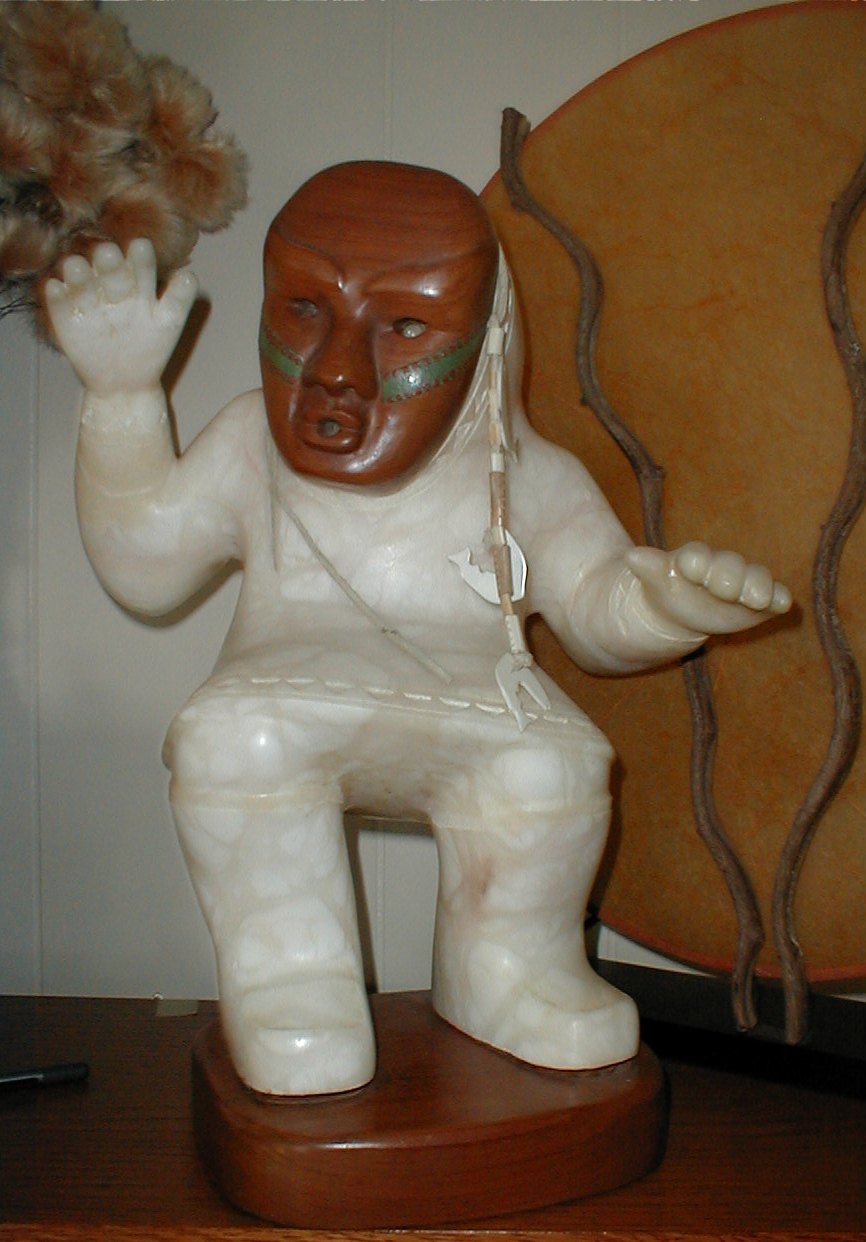
 via Daily Prompt: CarveCarve
Lined up around the edges of the studio, rough cut stone takes up the under spaces along the walls. Under the finishing desk, mounds of stone hunker down, seemingly forgotten. Under the ledge that acts as a shelf. Bone and wood haphazardly stacked on shelves along the wall. A moistened finger brings out the color of the stone… a piece of soapstone with the colors of jade. Back in the corner, a find of alabaster. I am always fascinated when she “sees” something in a clump of stone; amazed that she won’t pull a piece out until her vision is clear. How does her mind work to decide to make that first cut with the handsaw, taking off the stone she won’t use? Completely self-taught, she finds a balance, not only in literally making the stone stand on its own, but in the other materials that she brings to the carved stone, each piece a brilliant carving in its own right; each piece a part of herself, the story she is telling about her people, past and present, and the environment in which she thrives.

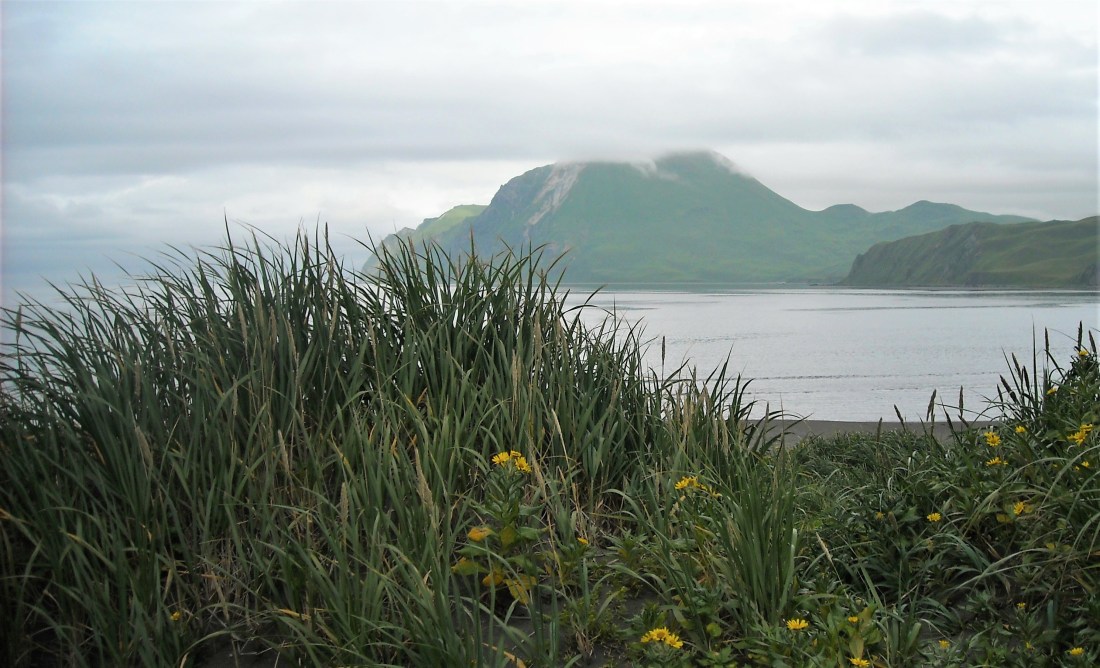 Weaving used to be a very utilitarian aspect of Unangan life. Grasses were used to weave fish baskets, berry baskets, clam containers, floor mats, wall coverings, room dividers, mittens, socks, burial mats, capes….you name it and it was probably a woven product. The beauty of the fine weaving, though, was not recognized until the Unangax^ were invaded by Russian fur procurers and items began leaving the region, either as items taken forcibly, or, in later years, as items of trade.
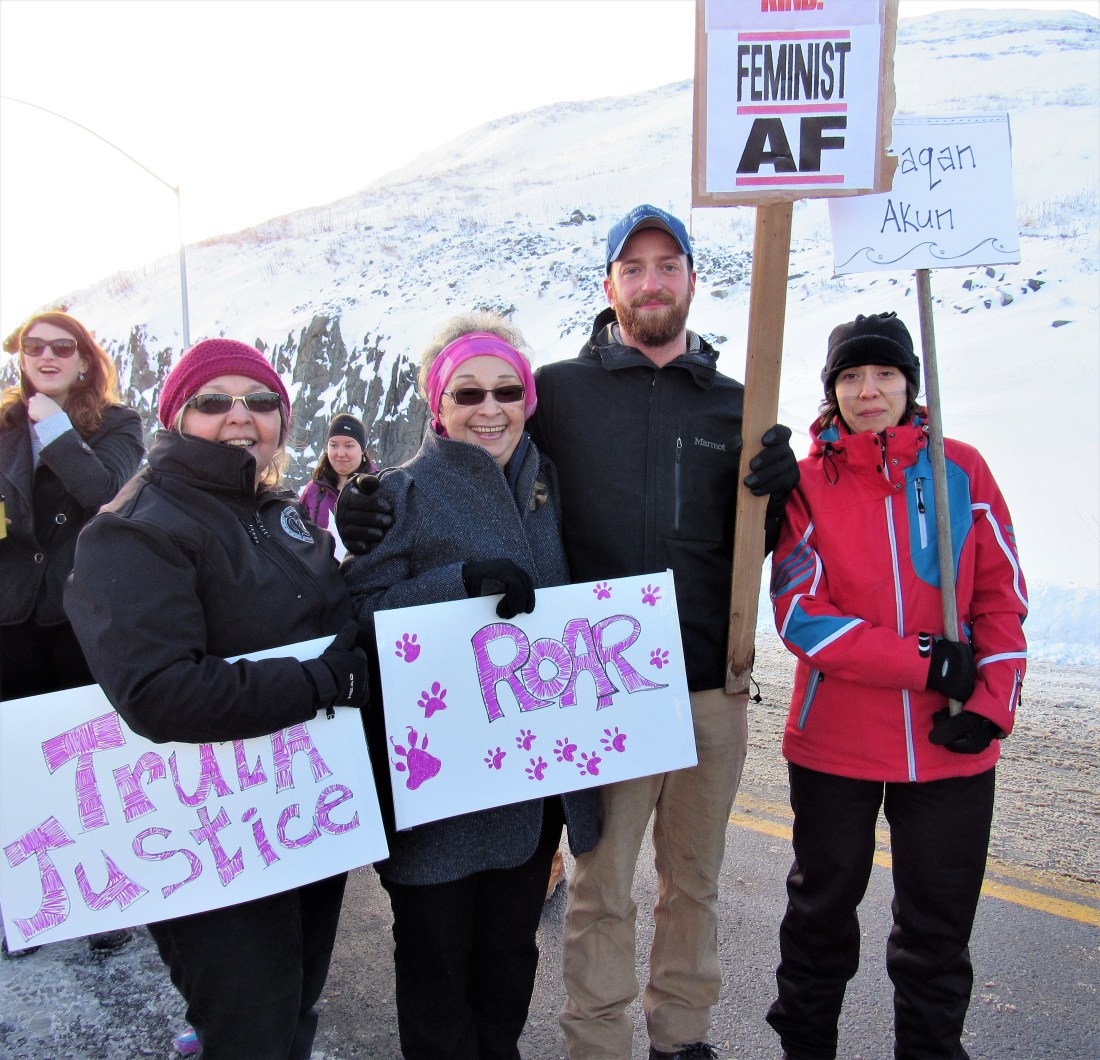 We are privileged to live in an extremely diverse town. If you can think of a nationality, we most likely are fortunate to have one or two or a small community living here. We just all live and work together. Our community is a blue town living in a red state. We believe in equality and justice for all.
 Unalaska From My Point of View
You must be logged in to post a comment.