
When you live within the Ring of Fire, you learn to live with volcanoes. The “Ring of Fire” is a chain of volcanoes skirting the edges of the Pacific Ocean. Containing 450+ volcanoes, it is shaped subtly like a horseshoe. It stretches an unbelievable 25,000 miles from the southern tip of South America, along the coast of North America, including the Aleutian archipelago. It continues through Japan and reaches down to New Zealand.
Unalaska Island’s highest elevation is Makushin Volcano, topping out at 5906 feet. It is located approximately 15 miles west of the City of Unalaska. It is an active volcano, with the last eruption noted in 1995. Makushin is constantly steaming, which means it is venting…which is a good thing. Bogoslof Island is 61 miles northwest of Unalaska Island. Bogoslof, or Aĝasaaĝux̂, is the summit of a submarine stratovolcano located at the southern edge of the Bering Sea. It was first recorded by non-indigenous seafarers during an eruption in 1796. It has been erupting off and on through the years, sometimes losing terra firma and sometimes gaining. It has become a breeding sanctuary for sea birds, seals, and sea lions.
Bogoslof began a series of eruptions in December 2016, almost daily, spewing volcanic ash clouds high into the atmosphere and sporting volcanic lightning. Through all the fury of upheaval, the island, as of May 2017, has grown from 71.2 acres to 319 acres, or nearly 1.3 kilometers. And what has happened to the animals that call Bogoslof home, or at least a respite? Typically, animals are extremely adaptable. They leave when there are explosions, swimming to nearby islands and come back when things are quiet. The Fish and Wildlife Service has reported that even with eruptions occurring in March, marine mammals returned to birth their young.
In Unalaska we face a daunting number of issues when volcanic activity is present. There are ash clouds and ash fallout. Lahars and floods, pyroclastic flows, clouds, and surges. Debris avalanches and lava flows are not so much a worry as are directed blasts, volcanic gases, and volcanic tsunamis. If you are a resident of Unalaska, you really don’t dwell on the issue. Unless, of course, you don’t get your mail; or your flight has been canceled because of ashfall. When you think about it, the real danger is that we could be decimated in a matter of seconds by a pyroclastic cloud. Or a nuclear bomb. Volcano, bomb, bomb, volcano. Worrying about it won’t make it go away and nothing we can do will change the outcome. It is not a defeatist attitude. It is part of the price we pay for living in paradise.

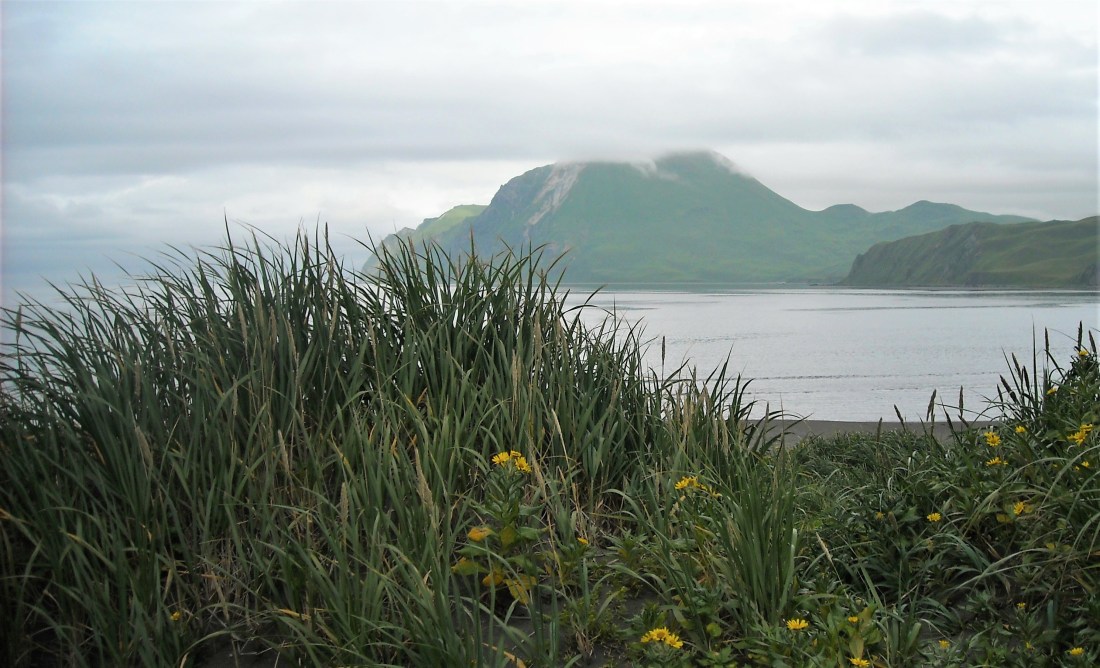 Weaving used to be a very utilitarian aspect of Unangan life. Grasses were used to weave fish baskets, berry baskets, clam containers, floor mats, wall coverings, room dividers, mittens, socks, burial mats, capes….you name it and it was probably a woven product. The beauty of the fine weaving, though, was not recognized until the Unangax^ were invaded by Russian fur procurers and items began leaving the region, either as items taken forcibly, or, in later years, as items of trade.
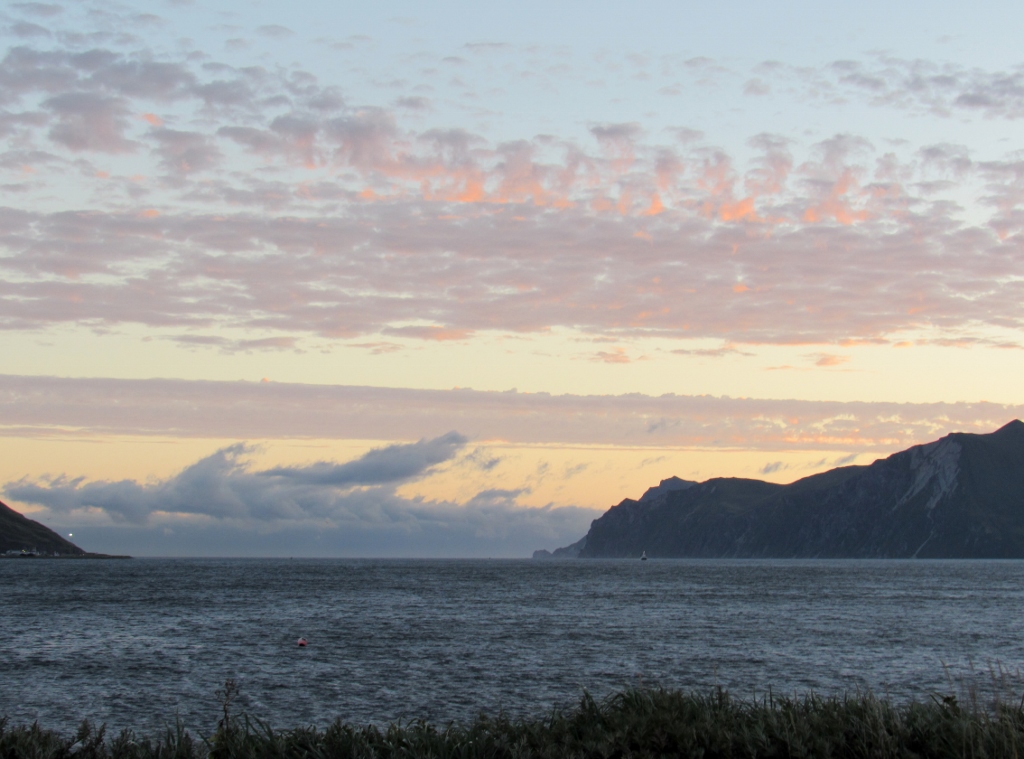 Our lives have come to revolve around the seasons much more than when we were younger. I’ve come to think of winter as the months that bring wood to our beaches so that we will have wood for our smokehouse during fishing season. Spring is when the plants start emerging, birds lay eggs, and the anticipation of good weather, calm seas, and fishing start ebbing in the corners of our minds. Summer, of course, is the time of plenty. Plenty to hunt and gather. Plenty to do. Fall is when we are racing against time to finish gathering the last of the berries and hoping for good weather to hold long enough to be able to get enough silver salmon for the family.
 Unalaska From My Point of View
You must be logged in to post a comment.